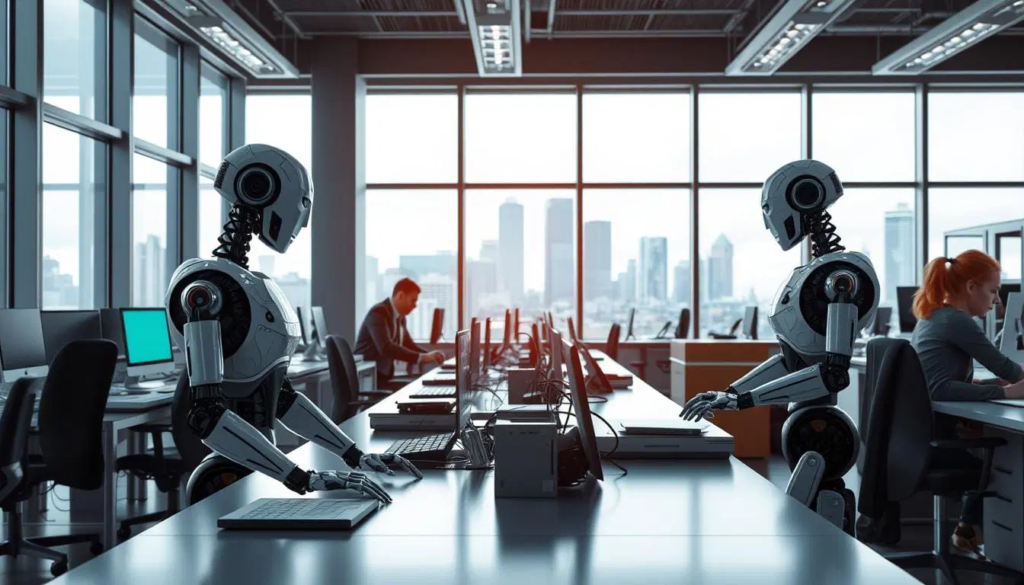
Artificial Intelligence (AI) is no longer limited to science fiction or research laboratories. It has become a part of everyday life, helping people complete tasks faster, make better decisions, and improve convenience. From smartphones and smart homes to healthcare and education, AI is transforming the way people live and work.
As technology continues to evolve, artificial intelligence will play an even greater role in daily activities. Understanding how AI is shaping the future helps individuals and businesses prepare for the opportunities and challenges ahead.
What Is Artificial Intelligence?
Artificial Intelligence is the ability of computers and machines to perform tasks that normally require human intelligence. These tasks include learning, problem-solving, recognizing speech, understanding language, analyzing data, and making decisions.
Unlike traditional software that follows fixed instructions, AI systems can improve over time by learning from data and experience. This ability allows AI to become more accurate and useful as it processes more information.
Why Artificial Intelligence Matters
AI is changing almost every industry. It helps businesses reduce costs, improve efficiency, and provide better customer experiences. For individuals, AI saves time by automating routine tasks and offering personalized recommendations.
As AI technology becomes more advanced, it will become an essential part of everyday life rather than an optional tool.
AI in Smartphones
Most people already use AI every day without realizing it.
Smartphones use AI to improve photography, recognize faces, predict text while typing, filter spam calls, translate languages, and provide voice assistants.
Features powered by AI include:
- Face recognition
- Voice assistants
- Camera enhancement
- Predictive text
- Smart search
- Battery optimization
Future smartphones will become even smarter by understanding user habits and automatically adjusting settings based on daily routines.
Smart Homes Powered by AI
AI is making homes safer and more convenient.
Smart home devices can learn user preferences and automatically control lighting, temperature, security systems, and household appliances.
Examples include:
- Smart thermostats
- Smart lights
- AI security cameras
- Smart speakers
- Robot vacuum cleaners
These devices help save energy while improving comfort and security.
AI in Healthcare
Healthcare is one of the industries benefiting the most from artificial intelligence.
Doctors use AI to analyze medical images, detect diseases earlier, recommend treatments, and monitor patient health.
Benefits include:
- Faster diagnosis
- Improved medical accuracy
- Personalized treatment plans
- Remote patient monitoring
- Drug discovery
Wearable devices powered by AI can continuously monitor heart rate, sleep patterns, and physical activity, helping users maintain better health.
AI in Education
Education is becoming more personalized through AI.
Students can learn at their own pace using intelligent learning platforms that adjust lessons based on individual performance.
AI helps teachers by:
- Grading assignments
- Creating lesson plans
- Identifying learning gaps
- Providing personalized feedback
- Supporting online education
Future classrooms will combine human teaching with AI tools to improve learning outcomes.
AI in Transportation
Transportation is becoming safer and more efficient through AI.
Artificial intelligence helps with:
- Navigation
- Traffic prediction
- Route optimization
- Vehicle maintenance
- Driver assistance
Self-driving technology continues to improve and may become more common in the coming years, reducing accidents caused by human error.
AI in Shopping
Online shopping has become more personalized because of AI.
Retailers use AI to recommend products based on browsing history and previous purchases.
AI also helps businesses with:
- Inventory management
- Customer support
- Demand forecasting
- Fraud detection
- Personalized marketing
Customers enjoy faster service and more relevant product recommendations.
AI in Banking and Finance
Financial institutions rely on AI to improve security and customer service.
Common AI applications include:
- Fraud detection
- Credit scoring
- Investment analysis
- Chatbots
- Risk management
AI analyzes large amounts of financial data within seconds, helping banks detect suspicious activities more quickly.
AI in Entertainment
Entertainment platforms use AI to recommend movies, TV shows, music, and videos based on user preferences.
Streaming services analyze viewing habits to suggest content users are more likely to enjoy.
AI also assists in:
- Video editing
- Music creation
- Game development
- Content recommendations
Personalized entertainment experiences continue to improve as AI becomes more advanced.
AI in Customer Service
Many businesses now use AI chatbots to answer customer questions 24 hours a day.
AI customer support offers:
- Instant responses
- Faster issue resolution
- Reduced waiting times
- Multilingual communication
- Consistent customer experiences
Human agents continue handling complex situations while AI manages routine inquiries.
AI in the Workplace
Artificial intelligence is changing how businesses operate.
Employees use AI tools for:
- Data analysis
- Report generation
- Email management
- Scheduling
- Project planning
Rather than replacing workers entirely, AI often helps employees become more productive by automating repetitive tasks.
AI in Agriculture
Farmers are using AI to increase crop production and improve efficiency.
AI supports agriculture by:
- Monitoring crops
- Detecting plant diseases
- Predicting weather
- Managing irrigation
- Optimizing fertilizer use
These technologies help reduce waste while increasing food production.
AI and Environmental Protection
Artificial intelligence can help protect the environment by analyzing climate data and improving resource management.
Applications include:
- Energy optimization
- Wildlife monitoring
- Forest protection
- Waste management
- Pollution tracking
AI allows governments and organizations to make more informed environmental decisions.
AI and Personal Productivity
AI-powered productivity tools help people organize their daily lives.
Popular uses include:
- Smart calendars
- Task management
- Email writing
- Meeting summaries
- Language translation
These tools reduce manual work and allow people to focus on higher-value activities.
Challenges of Artificial Intelligence
Although AI offers many benefits, it also presents several challenges.
Privacy Concerns
AI systems collect and analyze large amounts of personal data. Protecting user privacy remains an important responsibility.
Job Changes
Automation may change some job roles while creating new opportunities that require advanced technical skills.
Ethical Issues
Developers must ensure AI systems remain fair, transparent, and unbiased.
Security Risks
AI systems can become targets for cyberattacks if proper security measures are not implemented.
The Future of AI
Artificial intelligence will continue becoming more intelligent, accessible, and integrated into daily life.
Future developments may include:
- Smarter personal assistants
- More advanced healthcare systems
- Fully connected smart cities
- Improved autonomous transportation
- Personalized education
- Better workplace collaboration
- Faster scientific discoveries
AI will likely become as common as smartphones and the internet are today.
Tips for Using AI Responsibly
To benefit from AI while minimizing risks:
- Protect personal information.
- Verify AI-generated information before using it.
- Continue learning new digital skills.
- Use trusted AI platforms.
- Combine AI assistance with human judgment.
Responsible use ensures AI remains a helpful technology for everyone.
Conclusion
Artificial Intelligence is transforming everyday life in ways that were once difficult to imagine. From healthcare and education to transportation, shopping, entertainment, and workplaces, AI is improving convenience, efficiency, and decision-making across many industries.
As technology continues to evolve, artificial intelligence will become even more integrated into daily routines. While challenges such as privacy, ethics, and security require careful attention, the future of AI offers significant opportunities for individuals, businesses, and society.
By understanding how AI works and using it responsibly, people can take full advantage of its benefits while preparing for the innovations that lie ahead.
Frequently Asked Questions
What is Artificial Intelligence?
Artificial Intelligence is technology that enables machines to perform tasks that usually require human intelligence, such as learning, reasoning, and decision-making.
How is AI used in everyday life?
AI is used in smartphones, smart homes, healthcare, education, banking, shopping, transportation, and entertainment.
Will AI replace human jobs?
AI will automate some tasks, but it will also create new jobs and help people work more efficiently.
Is Artificial Intelligence safe?
AI can be safe when developed and used responsibly with proper privacy, security, and ethical standards.
What is the future of Artificial Intelligence?
The future of AI includes smarter assistants, better healthcare, personalized education, autonomous transportation, and more intelligent everyday technology.