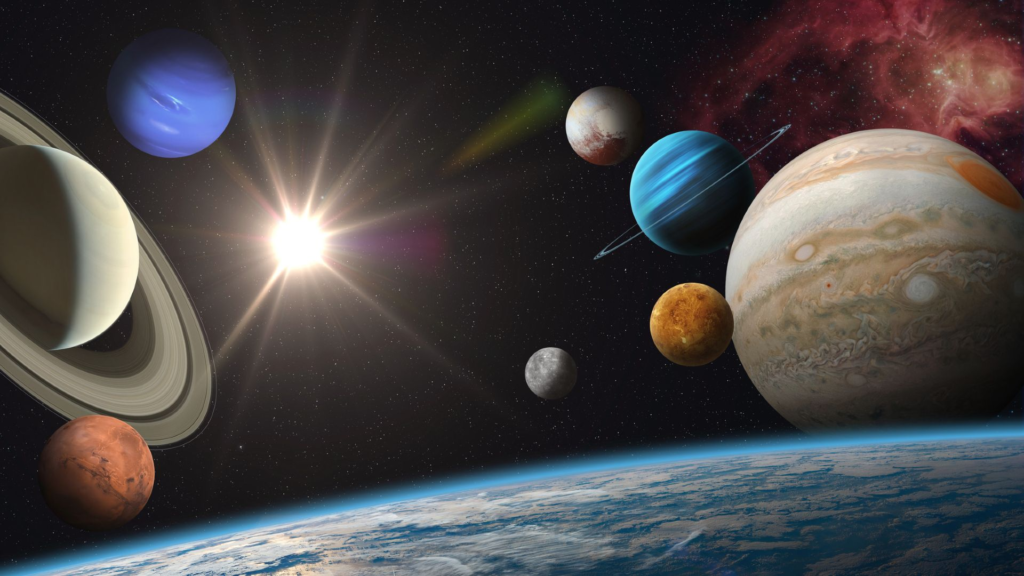
Science has revealed incredible discoveries about our universe, Earth, and the human body. Some of these facts seem so unbelievable that they sound like fiction, yet they are supported by scientific research. From mysterious black holes to the strange behavior of atoms, science constantly challenges the way we understand reality.
In this article, you’ll discover ten mind-blowing science facts that sound impossible but are completely true.
Why Science Is Full of Surprises
Scientific discoveries often reveal that nature works in ways that are very different from everyday experience. As technology improves, scientists continue to uncover new facts about space, biology, physics, and chemistry that expand our understanding of the universe.
Learning these facts not only increases knowledge but also inspires curiosity about the world around us.
1. A Day on Venus Is Longer Than a Year
One of the most surprising facts in our solar system is that Venus rotates extremely slowly. It takes about 243 Earth days for Venus to complete one rotation, while it orbits the Sun in about 225 Earth days.
This means a single day on Venus lasts longer than an entire Venusian year.
2. There Are More Trees Than Stars in the Milky Way
People often assume there are more stars than trees, but scientists estimate Earth has over three trillion trees, while the Milky Way contains around 100 to 400 billion stars.
Although the observable universe contains far more stars overall, our planet alone has more trees than stars in our galaxy.
3. Bananas Are Naturally Radioactive
Bananas contain small amounts of potassium-40, a naturally occurring radioactive isotope.
The radiation level is extremely low and completely safe to eat. You would need to consume an unrealistic number of bananas in a short time before the radiation became harmful.
4. Water Can Boil and Freeze at the Same Time
Under very specific conditions called the triple point, water can exist as a solid, liquid, and gas simultaneously.
This fascinating phenomenon demonstrates how temperature and pressure influence the behavior of matter.
5. Octopuses Have Three Hearts
Octopuses have three hearts:
- Two pump blood to the gills.
- One pumps blood to the rest of the body.
Interestingly, the main heart temporarily stops beating while the octopus swims, which is one reason these animals often prefer crawling instead of swimming.
6. Your Body Contains Trillions of Cells
The human body contains approximately 37 trillion cells, each carrying out specialized functions.
These cells continuously divide, repair tissues, fight infections, and help maintain normal body functions throughout your lifetime.
7. Lightning Is Hotter Than the Surface of the Sun
A bolt of lightning can reach temperatures of around 30,000°C (54,000°F).
For comparison, the Sun’s visible surface is about 5,500°C (9,900°F).
Although lightning lasts only a fraction of a second, it becomes much hotter than the Sun’s surface during that brief moment.
8. Sharks Are Older Than Trees
Sharks have existed for more than 400 million years, while the earliest trees appeared roughly 350 million years ago.
This means sharks were swimming in Earth’s oceans long before forests covered the land.
9. Space Is Completely Silent
Unlike Earth’s atmosphere, outer space is nearly a vacuum.
Since sound requires particles such as air or water to travel, there is no medium for sound waves to move through in space. Astronauts communicate using radio signals instead of normal sound.
10. Your DNA Could Stretch to the Sun and Back Many Times
If the DNA from every cell in your body were stretched into a single line, it would travel billions of kilometers.
Scientists estimate the total length would easily reach from Earth to the Sun and back many times, even though DNA is packed tightly inside microscopic cells.
Why These Facts Matter
Science facts like these remind us that reality is often stranger than imagination.
Studying science helps people:
- Understand the natural world
- Develop critical thinking skills
- Appreciate scientific discoveries
- Inspire innovation
- Encourage curiosity and lifelong learning
Every scientific discovery adds another piece to the puzzle of understanding our universe.
Amazing Fields of Science
Many branches of science contribute to these incredible discoveries, including:
Astronomy
Astronomy studies stars, planets, galaxies, and the universe.
Biology
Biology explores living organisms, genetics, ecosystems, and evolution.
Physics
Physics explains matter, energy, motion, gravity, and the fundamental laws of nature.
Chemistry
Chemistry investigates atoms, molecules, and the reactions that shape our world.
Earth Science
Earth science examines weather, oceans, earthquakes, volcanoes, and climate systems.
Together, these scientific fields continue expanding human knowledge.
Fun Ways to Learn More About Science
You can continue exploring science by:
- Reading science books
- Watching educational documentaries
- Visiting science museums
- Performing safe science experiments
- Following scientific discoveries online
- Observing nature
- Learning about space exploration
Science is constantly evolving, with new discoveries being made every year.
Conclusion
Science reveals an incredible universe filled with surprising facts that often seem impossible at first. From planets where a day lasts longer than a year to lightning that is hotter than the Sun’s surface, these discoveries demonstrate how amazing nature truly is.
As scientists continue exploring space, Earth, and life itself, even more fascinating facts will emerge. Staying curious and learning about science helps us better understand the world while inspiring future discoveries.
Frequently Asked Questions
What is the most surprising science fact?
Many people find it surprising that a day on Venus is longer than its year or that sharks existed before trees.
Is lightning really hotter than the Sun?
Yes. A lightning bolt can briefly reach temperatures of about 30,000°C, which is significantly hotter than the Sun’s visible surface.
Can water really freeze and boil at the same time?
Yes. Under specific pressure and temperature conditions known as the triple point, water can exist as a solid, liquid, and gas simultaneously.
Why is space silent?
Space is mostly a vacuum, and sound cannot travel without particles such as air or water.
Why is learning science important?
Science helps people understand nature, solve problems, develop new technologies, and make informed decisions about the world around them.